Introduce the cuisine simply, calling on olive oil, seasonings, spices and condiments.
There’s a whole lot more to the Mediterranean menu than familiar Greek and Italian cuisines. From European to African to Middle Eastern, flavours representing more than 20 countries are ready to offer excitement and dining differentiation.
Get your kitchen ready to help diners explore. The journey begins with some Mediterranean pantry basics that offer plenty of cross-utilization possibilities.
Olive oil
The most universal part of the Mediterranean diet, olive oil is healthy and versatile. It’s rich in healthy monounsaturated fats and loaded with antioxidants, both good for heart health.
Most people recognize extra virgin olive oil as a finishing oil, says Gordon Food Service Consulting Chef Nicholas Gonring. But with many flavour notes and colours, it’s also useful for salads, marinades, dips, cooking, sautéing, grilling and more.
“Canola oil is always going to taste like canola oil, without much flavour depth, but olive oil is like wine or coffee—climate, growing conditions and different blends can create wonderful flavours and characteristics,” Gonring said.
Another similarity between wine and olive oil is that it can go bad. Gonring cautions operators to taste olive oil before using to make sure it’s not rancid. “Once you add it in, you can’t take that flavour back.”
Herbs, spices and blends
The building blocks of Mediterranean flavour are in the seasonings. Any kitchen looking to build Mediterranean dishes can get started by adding herbs, spices and blends to the pantry. Many herbs—rosemary, thyme, oregano, mint, marjoram, sage, etc.— may be on the shelf already. The challenge is identifying ways to apply them to the menu.
“From a chef’s perspective, creating something that’s both healthy and flavourful is a daunting task, but all of the different global and ethnic pockets that make up the Mediterranean basin put a lot of great flavours at your disposal,” Gonring said.
Adding Mediterranean herbs elevates the flavour profile of healthy foods like eggs, potatoes, cauliflower and lean proteins like chicken or lamb. Chefs also can call on a few other spice blends common to the cuisine:
- Baharat. This all-purpose spice typically combines black pepper, cardamom, cloves, nutmeg, coriander and paprika and gets used in sauces, soups, vegetables and meats.
- Dukkah. Using a blend of nuts, sesame seeds, coriander and cumin, dukkah is similar to “everything” bagel seasoning. It adds a crunchy texture to fish, can be served atop a fried egg, or even be sprinkled on bread dipped in olive oil.
- Za’atar. A combo of oregano, thyme, marjoram, sumac and toasted sesame seeds is used to season meats, vegetables or even sprinkle on hummus.
Dips, sauces and condiments
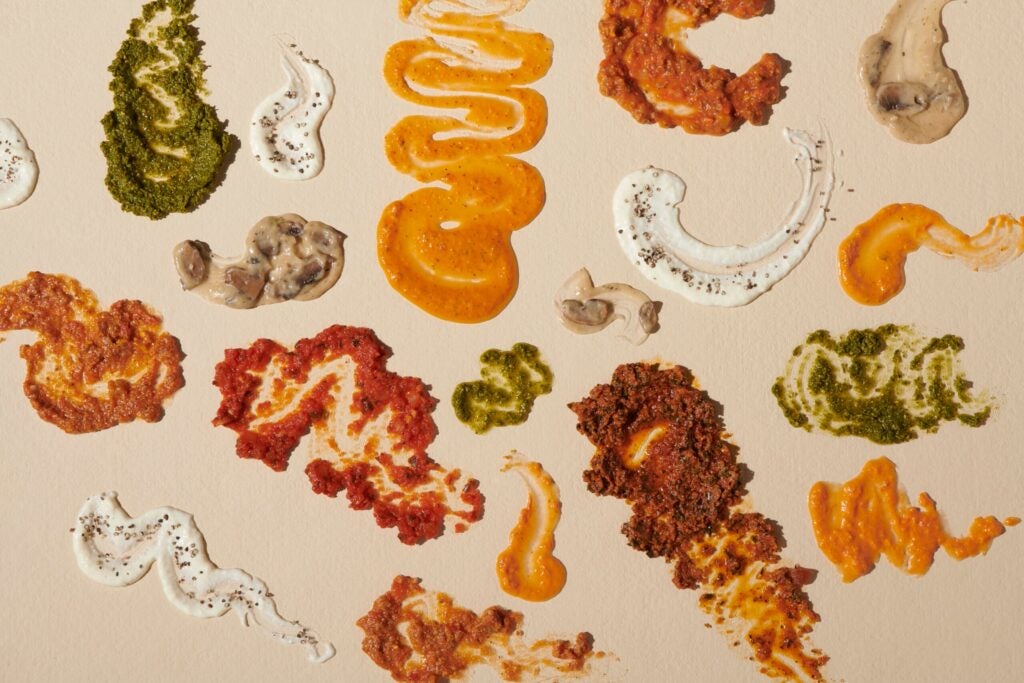
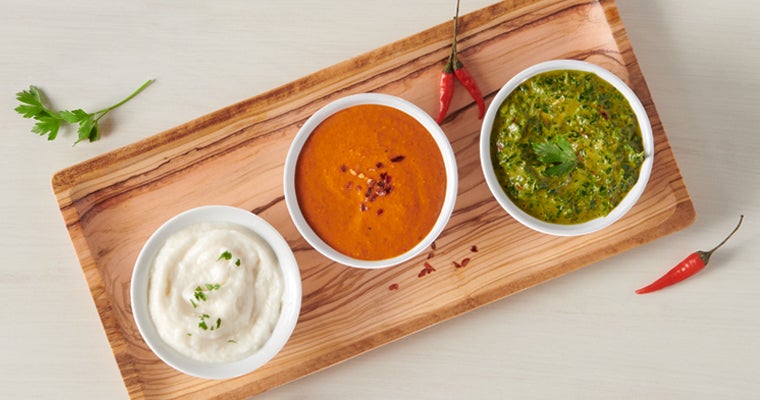
Another easy way to bring Mediterranean flavour to the menu is with dips, sauces and condiments. One popular option is harissa, a hot chile pepper paste used to perk up the flavours of everything from fish to vegetables to soups and stews.
“Harissa has become common through the years, and it’s pretty approachable for consumers,” Gonring said. “It comes pre-made in jars for easy, time-saving application.”
Gonring recommends two other condiments suitable for adding Mediterranean flair to the menu:
- Muhammara. Another red paste or dip, this one using red bell peppers, walnuts, pomegranate molasses and breadcrumbs. It makes a great sandwich spread or vegetable dip.
- Toum. This Lebanese garlic sauce has a creamy texture like mayonnaise, created using an emulsion of garlic, salt, olive oil and lemon juice. It’s ideal with chicken dishes or as a dip or condiment.
A flavourful snapshot
There are a lot of flavours floating through the cuisine of the nations touching the Mediterranean, so it’s easy to give consumers a tasty snapshot.
“Olive oil, spices, seasonings, and spreads are really simple to add, and they’re not costly or wasteful,” Gonring said. “Spices don’t go bad on you, so it’s easy to dabble in the Mediterranean space just by taking a new approach with foods you already serve.”



 English (Canada)
  Français du Canada