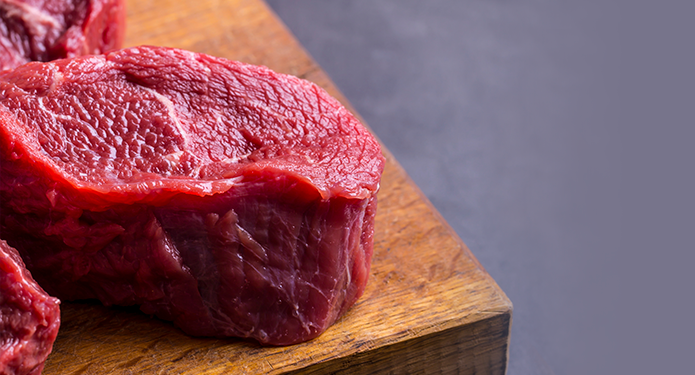
There’s more variety and more opportunity to expand your menu using these underutilized cuts.
The challenge of satisfying customers in the face of rising beef costs has operators stewing. And braising. And using secondary cuts in creative bistronomic approaches that are as satisfying to the bottom line as they are to customers.
“Secondary, or bistronomic cuts, bring value to operators because they provide the possibility of creating signature dishes at lower cost, and enable them to generate more margin per plate,” says Québec-based Gordon Food Service Corporate Chef Stéphane Renaud. “These cuts are appealing to customers because they resonate as comfort food.”
Although they lack the tenderness and cachet of prime cuts, there’s nothing secondary about bistronomic cuts’ ability to deliver an outstanding eating experience. And, while it can take days of brining/marinating and hours of slow-cooking to coax the best out of them, these cuts actually require little effort.
“You don’t have to be a culinarian to do something special,” says Alberta-based Gordon Food Service Business Development Specialist and former chef Art Beattie. That’s good news for labour-strapped operators. The even-better news? So fully flavoured that smaller portions satisfy, bistronomic cuts carry a high perceived plate value and command profitable price points. And they hold multigenerational appeal: baby boomers are sentimental about tender-braised cuts that bring back memories of childhood comfort foods; for millennials and Gen Z who didn’t grow up with much home cooking, they’re something new.
The cuts
“Economic cuts have more potential for creating unique recipes than a strip loin or a tenderloin,” Beattie notes. “The flavour is so much richer than a lot of other cuts. There’s more variety and more opportunity to expand your menu using these underutilized cuts. It can make you stand out from other guy next door.”
The following cuts, Renaud and Beattie recommend, are ideal for the bistronomic approach:
- Chuck flat
- Skirt steak
- Shank
- Short ribs
- Tri-tip
- Hanger steak
The following specialty cuts, Renaud notes, are among chefs’ favourites because they can be grilled:
- Teres major (aka bistro filet or chuck shoulder blade)
- Top blade
- Flat iron
“All these,” Renaud says, “can provide the customer with a great experience if the chef is preparing the cut properly.”
The techniques
“Depending on the cut used, the cooking technique will vary from grilling to sautéeing to braising,” Renaud explains. “It all depends on what the chef is looking for as an end result. Marinate skirt steak in a signature marinade and then grill it à la minute. Or, braise skirt steak slowly, then pull it to make some great pulled-beef sandwiches.”
Factors such as the size, grain and fat content also factor into the bistronomic equation.
Braising. Larger, heartier bistronomic cuts benefit from slow-roasting in a small amount of liquid. The resulting fork-tender meat can be sliced or shredded and cross-utilized in everything from salads to sandwiches to entrées.
“For braising-meats, there are tremendous opportunities because every demographic appreciates comfort food and the very high levels of satisfaction that come from the rich and flavourful gravies and sauces based on the cooking liquid,” says Michigan-based Gordon Food Service Corporate Consulting Chef Gerry Ludwig, CEC.
Custom cuts. Selective cutting and trimming can reduce cooking time and/or produce specific results. One example: “Cut chuck tender into medallions for quick sautéeing or grilling as for a steak,” Ludwig advises. “There’s little marbling, so avoid overcooking.”
Slicing. How value cuts are served also shapes diners’ enjoyment of bistronomic cuts. For example, Ludwig notes, “because flat-iron steak is cut with the grain, serve it sliced against the grain for that nice tender eating experience.”
Menu opportunities
“Each cut will bring it’s own personality and flavour to a dish,” Renaud explains. “Some will need to be marinated over a long period of time or braised, but all of them, prepared properly, will enable chefs to create great signature dishes that will please their patrons. Also, secondary cuts will bring back old classics forgotten over time, bringing back great memories and comfort for the soul.”
Chuck flat. Braise for four hours in a dark-beer reduction and serve with smashed potatoes and grilled vegetables.
Skirt-steak fajitas. Grill marinated skirt steak and serve in soft tacos with shaved lettuce, pico de gallo and guacamole.
Beef shank. Slowly braised in rosemary demi-glace served with Israeli couscous and fresh ratatouille.
Tri-tip steak. Grill and serve with french fries and Cafe De Paris Sauce.
The bottom line? Innovate and put bistronomic cuts to use in unexpected ways that delight diners and differentiate your operation from the competition.
“These cuts,” Beattie says “are so tender and flavourful they’re opening customers’ eyes to alternatives to New York strip, filet and ribeye.”


 English (Canada)
  Français du Canada