
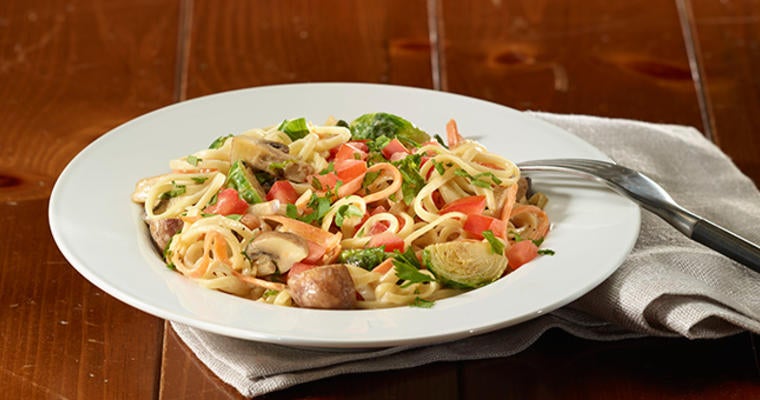
For many people, eating vegetables is a bit like doing yoga. It’s not fun until someone actually makes it fun. Veg-centric cooking provides an avenue for chefs to have some fun, exercisie their creativity, and use vegetables as the centerpiece of the meal. The move toward more veg-centric offerings is taking off on restaurant menus everywhere, and it’s shaping up as a long-term opportunity to create colourful, flavourful dishes that diners will find exciting and operators will find profitable.
The question many restaurants face is wondering whether veg-centric will work for them. For independent restaurants, the answer is yes, says Bob Koch, a Gordon Food Service Segment Leader in Indianapolis.
Be Creative
“Local, farm-to-table, sustainable dining has been popular for some time, and this just opens the door to veg-centric cooking,” Koch says. “Taking advantage of the seasonal of fruits and vegetables usually means there’s an abundant supply, so it will be cheaper and more profitable.”
By taking local, garden-fresh seasonal produce and enhancing it with global flavours or using aggressive cooking methods, you can create a menu favourite without a lot of expense. You may already stock popular flavours such as ginger, wasabi, peri-peri, or ghost peppers, and all it takes is a willingness to incorporate them and experiment with pan-searing, char-grilling, caramelizing, etc., to find a unique preparation.
“Showcasing different cooking methods is more about creativity than cost,” Koch says. “Braising a seasonal vegetable in a beef broth, topping it with a sauce, or sprinkling it with cheese is within reach of most kitchens.”
Beat Your Competitors
Gordon Food Service Corporate Consulting Chef Gerry Ludwig, CEC, stresses that restaurants must go further than simply serving farm-to-table seasonal products.
“You’ve got to take these ingredients and put them to better use than your competitors,” he says. “Any chef worth his or her salt will source the best-tasting raw products; it’s what you do with them that counts.”
He points to the grilled nectarine salad at Gjelina in Los Angeles as an example. It uses nectarines, burrata, Treviso, arugula, prosciutto, and a drizzle of aged balsamic—a combination of textures, temperatures, and sweet and salty flavors to create a whole that is greater than the sum of its parts.
This reinforces two of the main reasons people dine at your restaurant, Koch says.
“They want food they can’t make at home, and they want your food because you make it better than anyplace else,” he says. “Veg-centric cooking gives chefs the opportunity to create colourful, uniquely flavourful plates that customers will crave.”
Reach All Generations
One of the big benefits of veg-centric cooking is that it can appeal to each generation in a different way. John Horvath, a Gordon Food Service Product Specialist based in Northern Indiana, says this macro-trend plays into all generations and all menu parts, from sharing plates and starters to main courses and desserts.
“People from Gen Z and the millennial groups are looking for natural foods, and people in Gen X want fresh, build-you-own options,” he says. “Boomers want to eat the foods grandma grew in the garden but prepared a different way.”
Horvath reminds kitchen managers that the Markon Ready Set Serve portfolio of products is a good solution for a veg-centric program. It features labour-saving fresh produce, available with less price fluctuation and the backing of the 5-Star Food Safety program.
“Veg-centric dishes take fruits and vegetables that restaurants already stock and moves them to the center of the plate,” he says. “Chefs are able to use their authority to cook them in their style.”
Whether that means roasting Brussels sprouts in a homemade beer, creating a roasted carrot purée, or serving a roasted wedge of cauliflower with chickpeas and a tomato-based sauce, veg-centric is anything but bland.



 English (Canada)
  Français du Canada